
Lap-Band Surgery in Darien & Bolingbrook, IL
Medically reviewed by Sofiane El Djouzi, MD, FACSUpdated November 2026
The Lap-Band is an adjustable silicone band placed around the top of the stomach. It creates a small pouch that fills quickly, so you feel full on less food. Nothing is cut, stapled or rerouted, the band can be tightened or loosened in the office, and it can be removed.1,2 It also gives less weight loss than a sleeve or bypass and needs more follow-up, so I place it for a small number of patients. Here is how it works, how I place it, and how to tell whether it fits you.
How the Lap-Band works
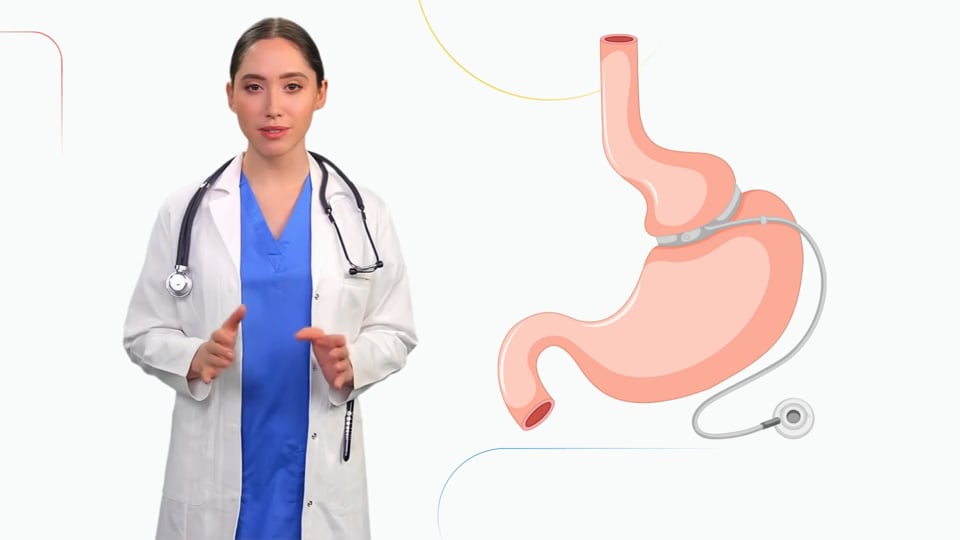
The band is a soft silicone ring with an inflatable inner lining. I place it around the upper part of your stomach, where it creates a small pouch above the band and a narrow opening into the rest of the stomach.1 Food fills the pouch first and passes through slowly, so a small meal feels like enough.
Thin tubing connects the band to a port that sits under the skin of your abdomen. Adding saline through the port tightens the band, and taking saline out loosens it.1,3 No other weight-loss operation can be adjusted this way after surgery.
What the band doesn't change
- Your anatomy. No part of the stomach is removed and the intestines aren't rerouted.1
- How you absorb food. The band has the lowest risk of vitamin and mineral deficiencies of any bariatric operation.1
- Your metabolism. The band works by restriction alone. Its effect on metabolism is modest, and it's less effective against type 2 diabetes than other operations.1
Who is a candidate for a Lap-Band?
The FDA approved the Lap-Band for adults with a BMI of 40 or higher, or a BMI of 30 or higher with at least one weight-related condition, when supervised diet, exercise and behavior programs haven't worked.3
Meeting those criteria doesn't make the band the best choice. I place bands for a small number of patients: people who have a medical reason they can't have another procedure and for whom the band is the best fit. For most people, a gastric sleeve or a gastric bypass gives more weight loss that lasts longer, and that's what I usually recommend.
What a band asks of you
- Frequent visits in the first year. Expect a check every four to six weeks while we find the right fill.1,3
- Lasting changes in how you eat. The band only works alongside lifelong changes in eating habits.3
- Patience. About one to two pounds a week is the pace we aim for, which is slower than after a sleeve or bypass.3
When I won't place a band
The band isn't safe for everyone. I don't place one if you have Crohn's disease, active ulcers or severe inflammation of the esophagus, cirrhosis or portal hypertension, chronic pancreatitis, an alcohol or drug addiction, or a need for long-term steroids, or if you're pregnant or under 18.3
Not sure where you fall? The 60-second candidate quiz is a good first step before your consultation.
How I place the band
Band placement is done under general anesthesia and typically takes 30 to 60 minutes.2 These are the steps:
- Small incisions. I work through a few small openings in the abdomen with a camera and long, thin instruments.2
- Placing the band. I pass the band around the top of the stomach and lock it into a ring, which creates the small pouch above it.1,3
- Setting the port. The tubing runs to a small port that I anchor under the skin of your abdomen, where a needle can reach it for fills.2
- Waiting to fill. The first fill waits until you've healed, six weeks or more after surgery.3
Most patients go home the same day.1,2 Because nothing is removed or rerouted, the stomach itself hasn't been cut if the band ever needs to come out.
Watch: Dr. El Djouzi on the Lap-Band
A 6-minute video from Dr. El Djouzi about the adjustable gastric band.
Fills: how the band is adjusted
A band that's too loose doesn't limit how much you eat. A band that's too tight makes it hard to swallow. Fills are how we find the setting in between.
- How a fill works. I pass a thin needle through the skin into the port and add or remove a small amount of saline. It's done in the office.1,3
- When fills start. The first one comes six weeks or more after surgery.3
- How often. Plan on a check every four to six weeks at first. Most people need several adjustments in the first year.1,3
- What we aim for. Steady loss of about one to two pounds a week. If you're losing faster than that, I leave the band alone. If you're losing less and eating comfortably, I add a little.3
Tell us if the band feels wrong
Trouble getting food down, vomiting after meals and not losing weight are all reasons to adjust the band. It can be loosened or tightened at any time.2
What results to expect
Weight comes off more slowly with a band than with other operations, and some people keep losing for up to three years. On average, patients lose a third to a half of their excess weight.2 Across 17 long-term studies, band patients had kept off about 46% of their excess weight at 10 years or more.4
That's less than after a gastric sleeve (60 to 70%) or a gastric bypass (about 75%).
What usually improves
- Portion control. A small meal feels like a full one.
- Weight-related conditions. Losing weight can improve type 2 diabetes, sleep apnea and high blood pressure.2 The band's effect on diabetes is weaker than a sleeve's or a bypass's.1
Want a projection built on your own numbers? The weight-loss calculator compares the band with a sleeve, a bypass and medication.
Lap-Band, sleeve or bypass?
These are the three operations patients ask me to compare most often.
Lap-Band
40 to 50% of excess weight. Home the same day. A device stays in your body and needs fills and regular visits.
Compare every procedure →Gastric sleeve
60 to 70% of excess weight. One night in the hospital for most patients. No implant to adjust or maintain.
About the sleeve →Gastric bypass
About 75% of excess weight. One night in the hospital for most patients. The stronger choice when reflux or type 2 diabetes is part of the picture.
About the bypass →Risks, and how we lower them
In the first weeks after surgery, the band has the lowest complication rate of any bariatric operation.1 The trade-off comes later. A band is a device, and a device can move, wear out or stop working.
Surgical and anesthesia risks
Bleeding, infection and blood clots are possible with any operation.2 Walking within hours of surgery lowers the clot risk.
Band slippage
The stomach can slide up through the band and cause vomiting, reflux or pain. In the U.S. approval study, slippage or pouch stretching was reported in 24% of patients over three years.3
Erosion
Over years, a band can wear into the stomach wall. In one long-term study this happened in 28% of patients, although those bands were placed with an older technique.5
Port and tubing problems
The port can move, leak or become infected, and the tubing can be punctured.2,3
I lower these risks with careful selection, small fills, regular visits, and an upper GI study or an endoscopy when symptoms appear. The FDA labeling describes the band as a long-term implant that may need to be removed or replaced at some point.3
When to go to the emergency room
If you suddenly can't keep down liquids or your own saliva, or you have severe belly pain, go to an emergency room. A slipped band can block the stomach and needs urgent care.
Your recovery timeline
Recovery after band placement is usually quick. These are typical ranges.
- Day of surgeryYou're up and walking within a few hours, and most patients go home the same day.1,2
- First two weeksMany people are back to normal daily activities within a day or two of going home.2 Most return to desk work within one to two weeks.
- Weeks 1 to 6Liquids first, then puréed and soft foods. Most people are eating regular textures by about six weeks.2
- Week 6 and afterYour first fill, then a check every four to six weeks while we fine-tune the band.3
- Year 2 onwardAdjustments as needed, a yearly visit, and a call any time eating changes or heartburn appears.
Our post-surgery instructions cover diet stages, medicines and warning signs in detail.
Insurance and self-pay
Most major plans cover Lap-Band placement when you meet their criteria. Blue Cross and Blue Shield of Illinois covers adjustable gastric banding for adults with a BMI of 40 or higher, or 35 to 39.9 with at least one weight-related condition, after conservative weight loss hasn't worked.8 Aetna uses similar thresholds.10 Cigna's 2026 policy starts at a BMI of 35, or 30 to 34.9 with a weight-related condition, and it covers band adjustments too.9
We verify your benefits for free before your first visit. If you'd rather self-pay, band pricing is quoted at your consultation, and financing is available. See insurance and financing and bariatric surgery cost.
Already have a band that's causing trouble?
Most of my work with the Lap-Band today is helping people whose band has slipped, eroded or stopped working. If you have heartburn, vomiting, food getting stuck or weight regain with a band, read about Lap-Band removal and revision.
Questions patients ask me about the Lap-Band
Is Lap-Band surgery still done?
Yes, though far less often than it once was. U.S. surgeons placed 55,932 bands in 2011 and 773 in 2023, because the gastric sleeve and gastric bypass give better, longer-lasting results.7 I still place a band for the few patients who have a medical reason they can't have another procedure and for whom it's the best fit.
How much weight will I lose with a Lap-Band?
On average, a third to a half of your excess weight, and it comes off more slowly than after other operations.2 In long-term studies, band patients had kept off about 46% of their excess weight at 10 years or more.4 Your own result depends on regular adjustments and on how you eat.
Is the Lap-Band reversible?
Yes. The band, tubing and port can be removed, and no part of the stomach is taken out when the band is placed.1 Most people regain weight after removal unless they convert to another operation.
How often will I need a fill?
The first fill comes six weeks or more after surgery. After that, expect a check every four to six weeks and several adjustments in the first year.1,3 After the first year, adjustments are made as needed.
Is a Lap-Band better than a gastric sleeve?
For most people, no. A sleeve gives more weight loss, needs no fills and leaves no device in the body. The band's advantages are that it's adjustable, it's removable, and it has the lowest rate of early complications.1 We decide together at your consultation.
Does insurance cover Lap-Band surgery?
Usually, when you meet your plan's criteria.8,9,10 We verify your benefits before your first visit, so you know what's covered.
Can a band be converted to another operation later?
Yes. If a band slips, erodes or stops working, I can remove it and convert to a sleeve, a bypass or SADI-S, usually in one operation. Read about Lap-Band removal and revision.
Patient reviews
What do patients say about Dr. El Djouzi?
Spends time with his patients and makes sure you understand all options available to you as well as explaining in great detail what the difference is between each procedure and the benefits each will offer. He then spends time answering all questions in detail. He definitely wants you to be fully informed and helps you make the best choice for you. Definitely a doctor that cares about his patients.
★★★★★
Rob, Google review
I met with Dr. El Djouzi today for my consultation, he really took his time to talk to me and explained everything in detail. I was so nervous at first but talking to him made me feel confident and at ease. Dr. El Djouzi is very professional and he does really care about his patients.
★★★★★
Ruphine, Google review
These are public Google reviews, shown with first names only. Read all reviews on Google.
Wondering whether a band is right for you?
Virtual or in-person consultations in Darien and Bolingbrook. We compare the band with every other option and verify your insurance before your first visit.
No referral needed · Consultations in as little as 48 hours · Hablamos Español · Call 773-365-1300
Sources
- American Society for Metabolic and Bariatric Surgery. Adjustable Gastric Band. ASMBS
- MedlinePlus, National Library of Medicine. Laparoscopic gastric banding. Reviewed July 6, 2026. MedlinePlus
- U.S. Food and Drug Administration. LAP-BAND AP Adjustable Gastric Banding System, Directions for Use. Premarket approval P000008/S017. FDA
- O'Brien PE, Hindle A, Brennan L, et al. Long-term outcomes after bariatric surgery: a systematic review and meta-analysis of weight loss at 10 or more years for all bariatric procedures and a single-centre review of 20-year outcomes after adjustable gastric banding. Obes Surg. 2019;29(1):3-14. DOI
- Himpens J, Cadière GB, Bazi M, et al. Long-term outcomes of laparoscopic adjustable gastric banding. Arch Surg. 2011;146(7):802-807. DOI
- Mellert LT, Cheung M, Berbiglia L, et al. Reoperations for long-term complications following laparoscopic adjustable gastric banding: analysis of incidence and causality. Cureus. 2020;12(5):e8127. DOI
- American Society for Metabolic and Bariatric Surgery. Estimate of bariatric surgery numbers, 2011 to 2023. ASMBS
- Blue Cross and Blue Shield of Illinois. Medical policy SUR716.003, Bariatric Surgery. Effective January 1, 2026. Policy
- Cigna. Medical Coverage Policy 0051, Bariatric Surgery and Procedures. 2026. Policy
- Aetna. Clinical Policy Bulletin 0157, Obesity Surgery. Policy
This page is general information, not medical advice. Results vary from person to person. Talk with Dr. El Djouzi about what to expect in your case.