
Gastric Balloon in Darien & Bolingbrook, IL
Medically reviewed by Sofiane El Djouzi, MD, FACSUpdated November 2026
The Orbera gastric balloon is a soft silicone balloon placed in your stomach through the mouth, then filled with saline. It takes up space, so you feel full on smaller portions. There are no incisions, placement takes about 20 to 30 minutes under light sedation, and you go home the same day. The balloon comes out after six months. In its FDA trial, patients lost about three times as much weight at six months as with diet and exercise alone.1
What a gastric balloon does
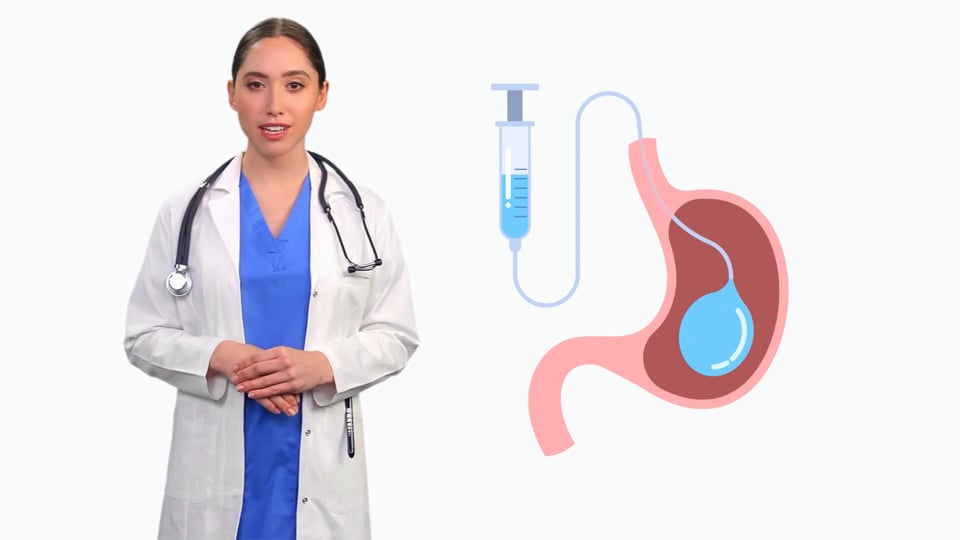
The balloon sits in your stomach filled with saline, roughly the size of a grapefruit. It leaves less room for food and slows how fast your stomach empties, so you feel full sooner and stay full longer. It doesn't change your anatomy, and nothing is cut or stapled.
Think of the balloon as a six-month head start. The weight you keep afterward comes from the eating habits you build while it's in. That's why the FDA approved these balloons for use with a supervised diet and behavior program, and why nutrition coaching runs the whole time.1
The balloon we offer is Orbera, a six-month balloon placed with an endoscope. Other FDA-approved balloons include an adjustable one that stays eight months and, since 2026, a capsule you swallow that empties and passes on its own.2,3 We currently offer Orbera only.
How I place a gastric balloon
Placement is an outpatient endoscopy with no incisions. These are the steps:
- A quick check first. I look at your stomach with the endoscope to make sure there's no ulcer, large hernia or other reason not to proceed.
- Light sedation. You sleep lightly through the procedure and breathe on your own.
- Placement. The deflated balloon passes through your mouth and esophagus into your stomach.
- Filling. I fill the balloon with sterile saline until it's about the size of a grapefruit, then release it from the scope.
- Going home. After a short stay in recovery, you go home the same day with medicine for nausea and stomach acid.
- Removal at six months. A second short endoscopy. I drain the balloon and remove it through the mouth.
Placement takes about 20 to 30 minutes.
Watch: Dr. El Djouzi explains the gastric balloon
A 5-minute overview of how the balloon works and who it helps.
Who is a good candidate for a gastric balloon
The endoscopic balloons are approved for adults with a BMI of 30 to 40 who haven't reached their goal with diet and exercise.1 The 2024 guideline from the American and European societies of gastrointestinal endoscopy supports endoscopic weight-loss procedures for a BMI of 30 or higher alongside lifestyle changes.4 A balloon tends to fit best when:
- Your BMI is between 30 and 40 and you want an option without surgery.
- You don't qualify for surgery or aren't ready for it.
- You want a structured six-month reset with regular check-ins.
- Weight-loss medicines didn't agree with you, or you don't want to take them long term.
Not sure where you stand? The 60-second candidate quiz gives you a starting point before your consultation.
Who should not get a balloon
A balloon isn't right for everyone. I don't place one if you've had stomach or esophageal surgery (including a sleeve, bypass or band), have a large hiatal hernia, active ulcers or inflammatory bowel disease, are pregnant or planning a pregnancy, or need regular blood thinners or anti-inflammatory pain medicine.3 For a BMI over 40 or type 2 diabetes, a gastric sleeve or gastric bypass usually gives better and longer-lasting results.
What results to expect
In the trial that led to FDA approval of the Orbera balloon, 255 adults with a BMI of 30 to 40 were randomized to a balloon plus a lifestyle program or the program alone. At six months the balloon group had lost 10.2% of their body weight, compared with 3.3%. Six months after removal they still averaged 7.6%, so most kept about three quarters of what they lost.1
Results depend on what you do during those months. The patients who do best use the balloon to practice smaller portions, protein first and regular activity, then keep those habits after removal.
What patients usually notice
- Fullness on small portions within the first weeks.
- Less snacking and grazing because the stomach empties more slowly.
- Steady weight loss over the six months, supported by regular visits.
Prefer to start with medication? See our medical weight loss program.
Risks, and how we lower them
Most side effects come in the first week while your stomach adjusts. Serious problems are rare, and you should know about them before you decide.
Nausea, vomiting and cramping
Most patients have them in the first days. In the Orbera trial, 87% had nausea and 76% had vomiting, mostly early on.1 Anti-nausea and acid-reducing medicines help.
Early removal
About 1 in 5 patients in the Orbera trial had the balloon removed early, most often because they couldn't tolerate it.1 Removal is a quick endoscopy.
Reflux and ulcers
The balloon can increase acid symptoms. You'll take an acid reducer the whole time the balloon is in.
Overinflation
The FDA has reported balloons that filled with extra air or fluid on their own, causing pain and vomiting. This needs early removal.5
Deflation and blockage
A leaking balloon can shrink and, rarely, move into the intestine and cause a blockage. Tell us right away about new cramping, vomiting or a sudden change in how full you feel.
Pancreatitis, perforation and deaths
The FDA has issued safety letters about acute pancreatitis, stomach perforation and a small number of deaths worldwide.5 These are rare, and we review the warning signs with you before placement.
Call us right away for severe or worsening belly pain, vomiting that won't stop or a fever.
Your recovery timeline
Most of the adjustment happens in the first week. These are typical ranges.
- Day of placementRest at home. Clear liquids only, in small sips.
- Days 1 to 3Nausea and cramping are at their worst. Take your medicines on schedule. Most people need a few days off work.
- Weeks 1 to 2Full liquids, then puréed foods.
- Weeks 3 to 4Soft foods, then regular textures in small portions.
- Months 1 to 6Regular visits, nutrition coaching and more activity each month.
- Month 6Removal, then a maintenance plan to protect your results.
Insurance and self-pay
Gastric balloons are almost always self-pay. Medicare doesn't cover them, and the 2026 policies from Blue Cross and Blue Shield of Illinois, Cigna and UnitedHealthcare all list intragastric balloons as investigational or unproven.6,7,8,9
Our all-inclusive price is $8,000. It covers placement, removal, anesthesia and your six months of care in between. Financing is available, and some patients use HSA or FSA funds, so check with your plan administrator. See insurance and financing.
Balloon, medication or a sleeve?
A balloon is a six-month tool, and GLP-1 medicines work as long as you take them. If your BMI is 35 or higher and you want the most reliable, lasting result, a gastric sleeve is usually the better choice. For a small number of patients, endoscopic sleeve gastroplasty is another option. See all procedures or our medical weight loss program.
Questions patients ask me about the gastric balloon
How much weight will I lose with a gastric balloon?
In the FDA trials, patients lost about 10% to 15% of their body weight while the balloon was in, compared with about 3% with diet and exercise alone.1,2 For someone who weighs 220 pounds, 10% is 22 pounds. Your result depends on how you use the six months.
Does the gastric balloon hurt?
Placement doesn't hurt because you're sedated. The first three to five days are the hardest, with nausea, cramping and sometimes vomiting while your stomach adjusts. Most patients feel much better by the end of the first week.
Is a gastric balloon covered by insurance?
Usually not. Medicare and the major commercial plans in Illinois classify it as investigational, so it's self-pay.6,7,8,9 Our all-inclusive price is $8,000, which covers placement, removal, anesthesia and your six months of care. Financing is available, and some patients use HSA or FSA funds.
What happens after the balloon comes out?
Your stomach goes back to its normal size, so the habits you built carry the result. In the Orbera trial, patients kept about three quarters of their weight loss six months after removal.1 If you need more, we can talk about medication or surgery.
Gastric balloon or Wegovy?
They work differently. A GLP-1 medicine like semaglutide (Wegovy) lowers appetite as long as you take it, and in its main trial patients lost about 15% of their body weight over 68 weeks.10 A balloon is a one-time, six-month device with no ongoing prescription. We can talk through both, and our medical weight loss program covers the medication side.
Is there a gastric balloon you can swallow?
Yes. In 2026 the FDA approved a balloon you swallow as a capsule during a short office visit. It fills with fluid in your stomach, stays about four months, then empties and passes on its own. It's approved for adults 22 to 65 with a BMI of 30 to 40, and not for anyone who has had stomach or esophageal surgery.3 We currently offer the Orbera balloon, which is placed with an endoscope.
Patient reviews
What do patients say about Dr. El Djouzi?
From my initial consultation with Dr. El Djouzi he made me feel comfortable and explained all options available to me. He is detailed, professional and sympathetic to your health needs. I recommend him to anyone looking for a bariatric surgeon.
★★★★★
Francis, Google review
I was very surprised and amazed on how well Dr. El Djouzi explained everything in my first consultation. The doctor really goes into details. He pretty much answers most of the questions you may have by the time he asks you if you have any questions. …
★★★★★
Maritza, Google review
Very involved in the process. Genuinely concerned about your experience, thoughts, progress, and success.
★★★★★
Crystal, Google review
These are public Google reviews, shown with first names only. Read all reviews on Google.
Ready to find out if a balloon is right for you?
Virtual or in-person consultations in Darien and Bolingbrook. We'll go over the balloon, medication and surgery so you can pick what fits.
No referral needed · Consultations in as little as 48 hours · Hablamos Español · Call 773-365-1300
Sources
- Courcoulas A, Abu Dayyeh BK, Eaton L, et al. Intragastric balloon as an adjunct to lifestyle intervention: a randomized controlled trial. Int J Obes. 2017;41(3):427-433. PubMed
- Abu Dayyeh BK, Maselli DB, Rapaka B, et al. Adjustable intragastric balloon for treatment of obesity: a multicentre, open-label, randomised clinical trial. Lancet. 2021;398(10315):1965-1973. DOI
- U.S. Food and Drug Administration. Summary of safety and effectiveness data, Allurion Gastric Balloon System (PMA P250023). 2026. FDA
- Jirapinyo P, Hadefi A, Thompson CC, et al. American Society for Gastrointestinal Endoscopy and European Society of Gastrointestinal Endoscopy guideline on primary endoscopic bariatric and metabolic therapies for adults with obesity. Gastrointest Endosc. 2024;99(6):867-885. PubMed
- American College of Physicians. Summary of FDA safety letters on liquid-filled intragastric balloons. ACP Gastroenterology Monthly. May 22, 2020. ACP
- Boston Scientific. 2026 endobariatrics coding and payment quick reference (Medicare coverage of intragastric balloons). PDF
- Blue Cross and Blue Shield of Illinois. Medical policy SUR716.003, Bariatric Surgery. Effective January 1, 2026. Policy
- Cigna. Medical Coverage Policy 0051, Bariatric Surgery and Procedures. 2026. Policy
- UnitedHealthcare. Commercial medical policy, Bariatric Surgery (2026T0362RR). Effective May 1, 2026. Policy
- Wilding JPH, Batterham RL, Calanna S, et al. Once-weekly semaglutide in adults with overweight or obesity (STEP 1). N Engl J Med. 2021;384(11):989-1002. DOI
This page is general information, not medical advice. Results vary from person to person. Talk with Dr. El Djouzi about what to expect in your case.